
I’ve noticed something recently when reading Google reviews. More and more of the replies from businesses appear to have been written by AI.
I first noticed it on the reviews of a business I know. They don’t get hundreds of reviews; perhaps two or three in a month. People had taken the time to write some really lovely things about them, often mentioning something specific they had enjoyed or somebody who had looked after them particularly well.
And the replies were AI.
Or at least, they certainly appeared to be. The usual rather effusive language, repeating parts of the review back to the customer, lots of delight and appreciation and looking forward to welcoming them back.
It made me a little sad for the business, more than anything else. Here were people who had already chosen them, spent money with them, enjoyed the experience and then taken the trouble to tell other people about it. Businesses spend an awful lot of time trying to get that sort of engagement from customers. In this case, the customers were handing it to them.
So why would you want to automate the response?
I wondered whether I was being unfair. I use AI myself, so perhaps I recognise its language more readily than other people do. Perhaps customers don’t notice, or simply don’t care.
I did a Google search to find out.
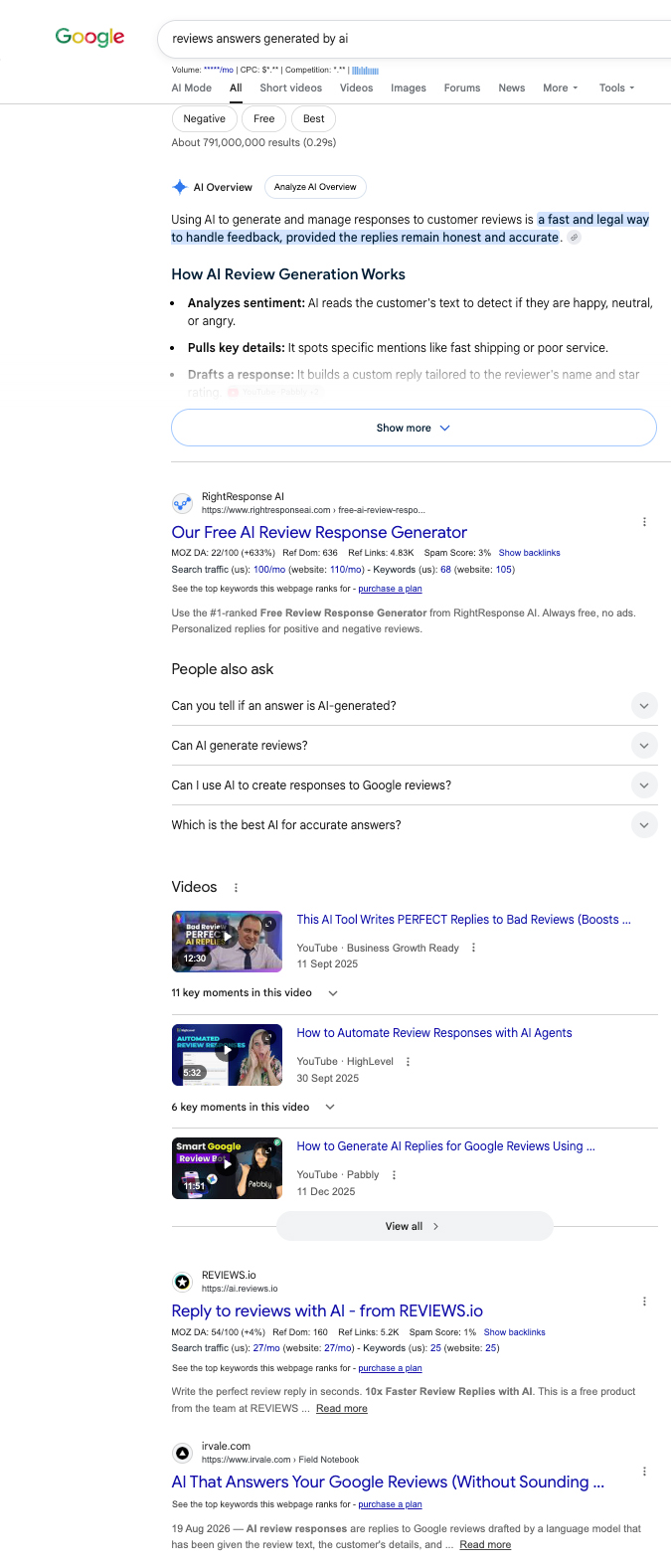
The results were quite revealing. There were plenty of companies offering AI tools to generate responses to Google reviews.
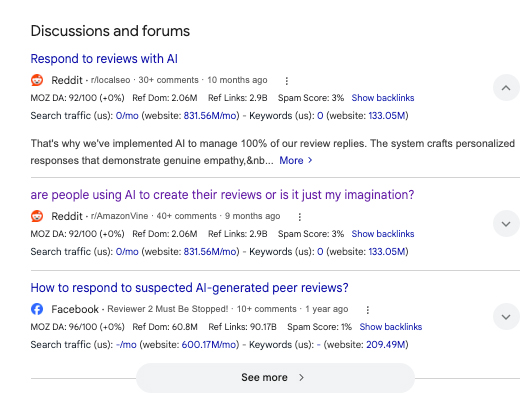

One Reddit discussion concerned a restaurant whose responses looked sufficiently AI-generated that people had started talking about them. Then someone came up with a tempting way of testing the theory (for me, anyway):
We’ve turned talking to customers into “review management”
Once I started looking, I realised there is an entire industry devoted to making this easier for businesses.
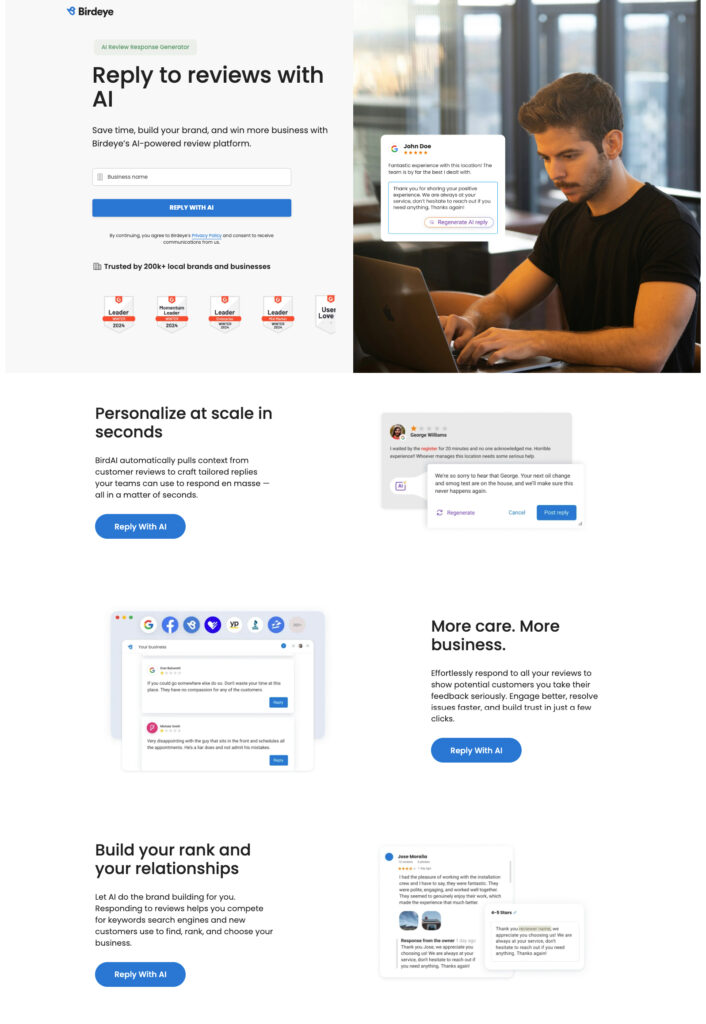
Birdeye’s AI Review Response Generator promises to “Personalise at scale in seconds” and allows businesses to “respond en masse”. It also offers this rather extraordinary proposition:
“Let AI do the brand building for you.”
I have a problem with that.
Not because AI has no place in the process. It absolutely does. But because it seems to start from the assumption that customer reviews are a workload: there are reviews coming in, they need responses, responding takes time, therefore let’s automate the responses.
Somewhere in that process, the person who wrote the review has disappeared.
If somebody emailed a restaurant after a meal and said they’d had a wonderful evening, particularly wanted to thank Sarah for looking after their mum, and would definitely be back, would the restaurant regard that email as a repetitive administrative task?
Probably not.
They might reply, “Thank you! I’ll make sure Sarah sees this. She’ll be really pleased.”
But put the same message on Google and suddenly we have a category of software called “review management”.
The customer hasn’t changed. The message hasn’t changed. Only the box they typed it into has.
Of course there are businesses receiving hundreds or thousands of reviews, where responding individually creates a genuine practical problem. That isn’t the situation for most small businesses I work with. When there are three reviews waiting for replies, I’m not sure what problem is being solved.
Especially when those same businesses may spend hours creating social media posts, taking photographs, writing newsletters, organising events or finding other ways of getting people to engage with them.
The customer has just engaged with you. All by themselves.
Talk to them.
Then it got slightly absurd
While looking into this, I inevitably ended up on Google’s own advice about reviews.
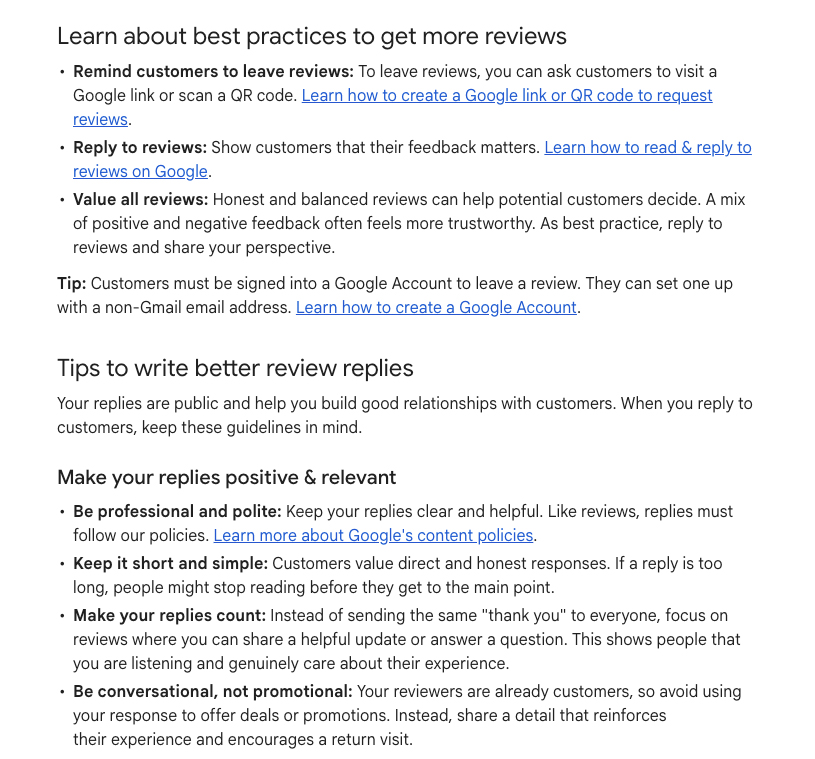
Google recommends replying to customers. Nothing surprising there. Reviews can help businesses stand out, and Google says replies show customers that their feedback matters.
But I particularly liked one piece of its advice. Rather than sending everybody the same generic thank-you, Google says businesses should make their replies count:
“This shows people that you are listening and genuinely care about their experience.”
Exactly.
But then I discovered that Google has also integrated Business Profiles with Gemini.
One of the things Gemini can now do is:
“Engage with customers by drafting replies to reviews.”
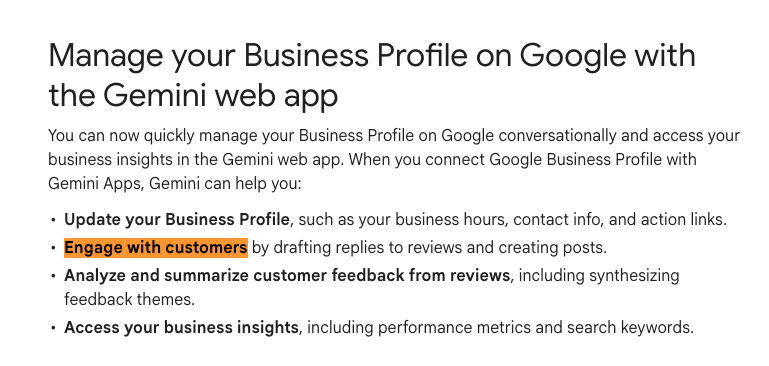
What?
Google wants businesses to show customers that they are listening and genuinely care about their experience, and its solution is… AI?
There is an important distinction here. Gemini says drafting. That could mean exactly the sort of use of AI that makes perfect sense to me. Read the review, think about what you want to say, then ask AI to help you formulate it. You might not be confident writing in English, you might be worried that your answer to a negative review sounds defensive, or you might simply want help making what you have written clearer.
That’s using AI as a tool.
But we’re also being sold systems specifically designed to remove more and more of that involvement: read the reviews, generate personalised replies, respond en masse.
And that’s where I struggle with it.
Because if the point of answering is to demonstrate that you listened, surely listening is the one bit you can’t automate.
The reply isn't only for the reviewer
There is another reason I think businesses are missing an opportunity here.
Other people read the replies.
I do.
When I’m looking at a business’s Google reviews, the reviews tell me what its customers think. The responses tell me something different: they tell me something about the business.
How does it react when something goes wrong? Does it become defensive? Does it actually answer the complaint? Does it know the member of staff somebody has mentioned? Does it sound warm? Funny? Formal? Helpful?
There is a person behind the business, and sometimes you get a little glimpse of them.
That’s valuable.
It is particularly valuable for a small business, because being small and human is something the large companies you’re competing against often can’t reproduce very well.
Why would you voluntarily remove it?
And sometimes the mismatch between the customer and the response is rather spectacular.
When the reply becomes a sales pitch
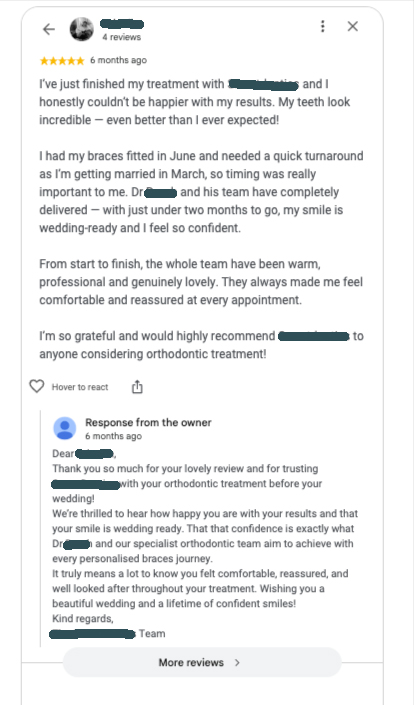
The customer has just finished her orthodontic treatment. She explains that she was getting married and needed a quick turnaround, that the treatment finished two months earlier than expected, and that she now feels confident and “wedding-ready”.
That’s quite a personal review.
The reply does acknowledge the wedding, but look at what happens almost immediately afterwards:
“That confidence is exactly what Dr Darsh and our specialist orthodontic team aim to achieve with every personalised braces journey.”
Where did that come from?
She wasn’t asking about the specialist orthodontic team. She was telling them how happy she was that they had managed to get her teeth ready in time for her wedding.
Then comes:
“It truly means a lot to know you felt comfortable, reassured, and well looked after throughout your treatment.”
And finally we get back to her wedding with:
“Wishing you a beautiful wedding and a lifetime of confident smiles!”
It has picked things out of her review, certainly. But somehow the interesting bits about her keep becoming statements about them.
The quick turnaround becomes evidence of what their specialist orthodontic team achieves. Her confidence becomes what they “aim to achieve with every personalised braces journey”. Feeling comfortable becomes confirmation that she was “well looked after throughout” her treatment.
It’s starting to sound less like somebody answering a customer and more like somebody has given the review to a copywriter and said, see what marketing messages you can get into the response.
And then I found this one.
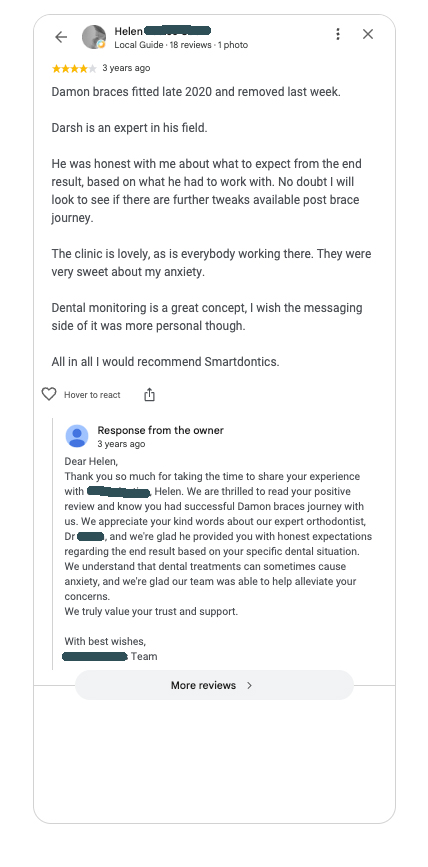
Again, mostly a positive review. She praises the orthodontist, the clinic and the staff. But she also makes one very specific criticism:
“I wish the messaging side of it was more personal though.”
The response begins:
“Thank you so much for taking the time to share your experience with SmartDontics, Helen.”
It then talks about the successful treatment, the orthodontist’s expertise, the team’s help with her anxiety, how much they value her trust and support…
And doesn’t answer the one criticism she made.
Not even: Thanks for mentioning the messaging. We’ll take that on board.
Nothing.
Which is rather unfortunate when the criticism was that the communication didn’t feel very personal.