What does the town name of Surbiton mean to you? Perhaps you think of it as a sleepy suburban town near Kingston-upon-Thames? Boring and middle class? Wasn’t it the location of a 70’s sitcom? The epitome of a conservative affluent Surrey? Well – let me illustrate to you the real Surbiton – its history and its well-deserved status as a fine and pleasant town, both to visit and reside in.
The History of Surbiton
Surbiton, formerly in Surrey, is now under the administrative umbrella of Kingston-upon-Thames, a Greater London borough. The town’s name goes back many centuries but became the name we know today – Surbiton – in 1592.
It started its major development during the Industrial Revolution and expanded significantly with the arrival of the railway. The first station opened in 1838 and was originally called Kingston-upon-Railway. At the time, the railway bypassed nearby Kingston-upon-Thames because of concerns that it would damage the existing coach trade.
The station was renamed Surbiton in 1869. Today, it is known for its impressive Art Deco architecture, a style that became popular in the late 1920s and 1930s. Surbiton enjoys a fast non-stop rail service to London Waterloo, making it a popular location for commuters.
The Development of Surbiton
Elegant Victorian townhouses became a feature of Surbiton during the nineteenth century. St Andrew’s Square remains one of the few surviving Victorian squares in England and sits within a conservation area.
Further residential expansion took place during the 1930s, particularly around Berrylands and neighbouring areas, helping shape the Surbiton we know today.
Culture and Amenities
Although neighbouring Kingston-upon-Thames offers a larger shopping experience, Surbiton has developed a thriving high street with a wide range of independent businesses, restaurants and local services.
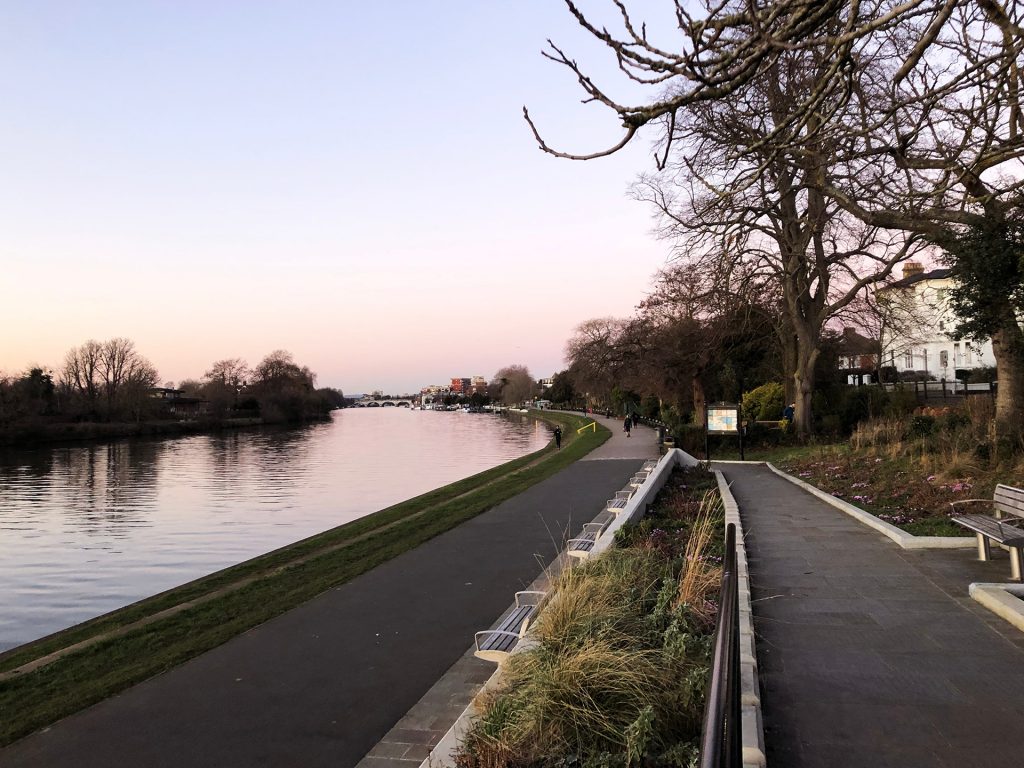
Some of the town’s attractions include riverside walks along Portsmouth Road, where visitors can board Turks Launches river cruises towards Hampton Court or Richmond.
On Maple Road, the monthly Surbiton Farmers’ Market has become a popular destination for locally produced food and artisan products. The area is also home to a number of well-known independent businesses, including The French Table restaurant and Shoes at Last.
Nearby Claremont Gardens provide a peaceful green space surrounded by distinctive Art Deco apartments.
Television and Film Connections
Surbiton is often associated with the classic BBC sitcom The Good Life, which helped cement the town’s place in popular culture.
The town has also appeared on screen in more recent years. Surbiton Station featured in Harry Potter and the Half-Blood Prince, making it a recognisable location for film fans.
Famous Connections
Surbiton has attracted a surprisingly diverse collection of notable residents and visitors over the years.
The artist John Everett Millais spent time in the area during the nineteenth century, while author Thomas Hardy lived in Surbiton for a period during the 1870s. Children’s author Enid Blyton also worked in the town as a governess.
Artist Alfred Bestall, famous for illustrating Rupert Bear, lived nearby, and Eric Clapton is said to have bought his first guitar from a Surbiton music shop.
Among the town’s better-known residents have been George Best, Julian Clary, David Essex, Roy Hodgson, John McCririck and Britain’s first astronaut, Helen Sharman.
Surbiton – a Great Place to Live
Surbiton combines attractive residential streets, excellent transport links and easy access to both the River Thames and Kingston-upon-Thames.
Its combination of history, architecture, green spaces and local businesses continues to attract residents who appreciate its distinctive character and sense of community.
For many people, Surbiton offers the best of both worlds: the convenience of London within easy reach and the atmosphere of a town that has managed to retain its own identity.